
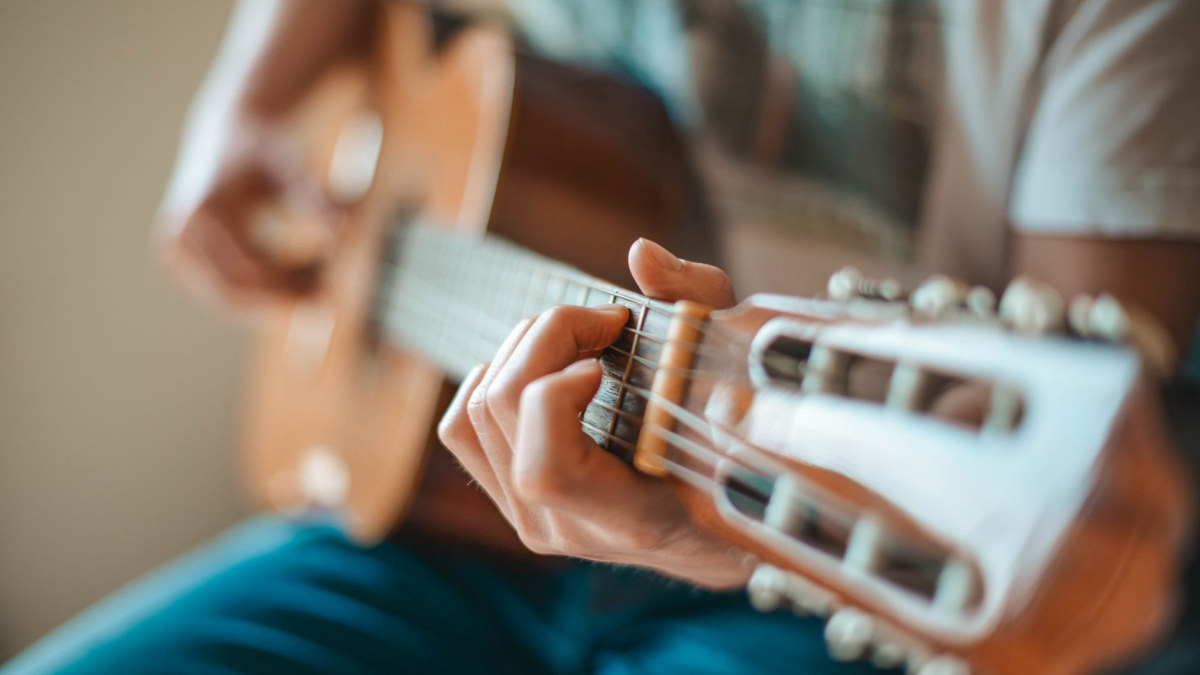
My name is Robert and as someone who has played guitar for over 40 years (mostly badly, I admit), it was a genuinely exciting moment when Heartfelt Support opened our music and art centre. Because I know from personal experience how much playing has given me over the years.
All the benefits of learning and playing guitar apply equally to people with and without disabilities — but for NDIS participants there’s the added bonus of alignment with plan goals.
Physical benefits
Playing guitar boosts coordination and fine motor skills, using both hands together in very different ways. Regular practice improves finger dexterity and strength, and good technique naturally encourages better posture. Playing builds hand and forearm strength, and learning chords and songs exercises concentration and memory. It can also be a reliable stress-relief activity — genuinely helpful for relaxation and mental wellbeing.
Social benefits
Playing guitar helps you build connections with others — initially your teacher, but eventually maybe with other musicians too. Performing and collaborating over time improves communication and teamwork skills. The confidence gained from sticking at something and improving genuinely builds self-esteem. Guitar is also a great outlet for creative expression, and if you sing, even better.
I’ve met people through music I would never have met any other way. If you’re someone who finds social situations awkward, having a shared interest like music makes connection much easier. This is something we see regularly in our programs.
Wait — there could be a problem
You might be ready to start, but you need two things: someone to teach you, and a guitar.
The guitar part is where many people go wrong. Most beginners start on an acoustic guitar. For most people, this is probably a mistake — unless you’re learning classical, nylon-stringed guitar. A cheap acoustic can be a frustrating first instrument.
Electric guitars generally have lighter strings and lower action, making them easier on your fingers. That not only reduces the initial discomfort of pressing down on strings but is far more forgiving when it comes to technique. The amplified sound and versatility of an electric guitar also lets you experiment with a variety of genres through effects pedals and different amp settings. You may not play like your favourite guitarist from day one, but you can dial up their tone.
Electric guitars can also be played quietly with headphones, so you can practice without disturbing anyone — which matters a lot depending on your living situation. (I practice daily from 5.30am to 6.30am. Without headphones, this would be deeply controversial.) Electric guitars also have a slimmer neck, which can be more comfortable for your hands and makes learning chords and scales somewhat easier.
What about the expense?
Not all electric guitars are expensive — but a very cheap one can be another bad option. Poor craftsmanship leads to rough fretboards, unstable tuning, and muddy sound. These things make learning harder, slow down your progress, and can kill your motivation early on. And when you’re just starting out, you don’t yet have the skills to adjust a neck or swap components to fix these problems.
A high-quality guitar is ideal. But why spend a lot before you know whether you’ll enjoy it or stick with it?
Our guitar loan program
We’ve built a solution for exactly this. We’ve acquired a range of Artist electric guitars — a good-quality Australian-owned brand — and we loan them to participants learning through us as part of their NDIS goals.
You can even swap between guitars each time to figure out which one works best for you. There’s no charge for the loan service, to you or the NDIS.
How it fits your NDIS plan
We offer music learning options funded through both Capacity Building (Therapeutic Supports) and Core (Community Participation) in your plan, depending on your goals. Whether you’re building fine motor skills, working on concentration, or simply looking for a way to connect with others, guitar can legitimately sit within your NDIS support.
You can find out more about our music programs here — or give us a call. Whatever style you want to play, we can sort you with a guitar to suit.
Ready to find out if we’re the right fit?
A free 15-minute consultation is a good place to start. No pressure, no commitment.
More from Heartfelt Support

Elements Employment Diversity Policy
Workplaces that are genuinely inclusive for people with disability don’t happen by accident. They require deliberate policy, ongoing commitment, and…

Types of Equine Therapy
Equine therapies are a group of support approaches that use horses to build confidence, regulate emotions, and develop skills. At…

The Neurodivergent Workforce Today and Tomorrow
Neurodiversity is a concept that recognises the natural variation in human cognition. Rather than treating differences such as autism, ADHD,…

My Job, by Astro the Disability Support Pony

NDIS Funding Is Now Split into Quarters. What That Means for You