
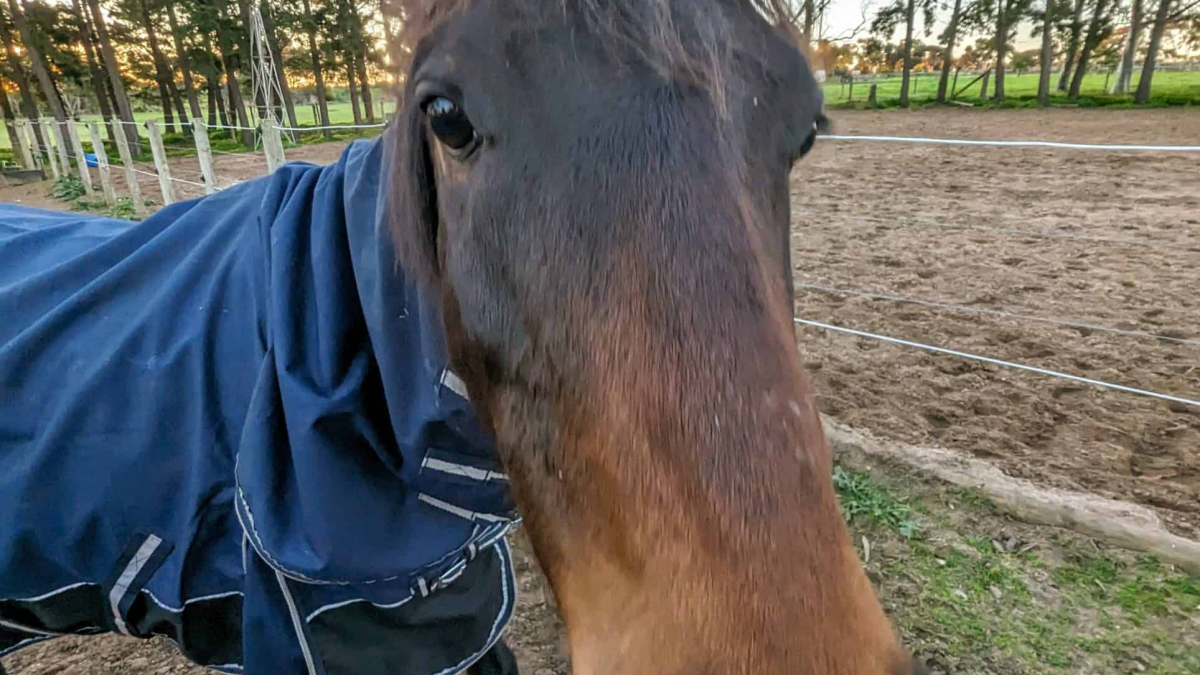
Hello. My name is Astro.
I am a small horse with a very important job.
| Type | Miniature horse |
| Location | Southern Adelaide, SA |
| Trained for | Equine-assisted therapy |
| NDIS funded | Yes — multiple support categories |
| Suitable for | All ages, all abilities, all experience levels |
Some people call me a therapy pony. Some people call me cute. Someone once called me “the fluffy boss.” I accepted that title, as I am widely recognised as the head of the pack.
I am also incredibly smart. If you arrive with carrots in your pockets, I will know. If you do not arrive with carrots in your pockets, I will check anyway.
At 13.2 hands high, I am a small horse, though technically a big pony. Rocky is about 8 hands. Vic, the old-timer, stands around 11. Size, as you will discover, has very little to do with authority.
My job is to support people to feel safe, calm, and confident. I don’t use big words. I don’t give instructions. I just stand, walk, listen, and sometimes breathe very loudly through my nose.
That’s how I help.
I am part of a horse-centred wellbeing programme that supports NDIS participants and others in the community to build confidence, emotional regulation, and social connection.
I help people slow down
Humans are often in a hurry. Their heads are full of thoughts about yesterday, tomorrow, and things they wish they had said differently.
When they come to see me, I do not rush.
I stand in the sun.
I swish my tail.
I consider the outline of their pockets very carefully.
After a while, the humans begin to match my pace. Their shoulders drop. Their breathing changes. They stop looking at their phones. They notice the wind.
Strong wind, I should mention, is highly suspicious and requires careful monitoring. This is called risk assessment.
Support workers call this regulation. I call it normal.
I help people feel safe
Some of the people who visit have had hard experiences. Loud noises, sudden movements, or crowded places can make their bodies feel like they are in danger, even when they are not.
I am predictable.
I do not shout.
I do not judge.
I do not ask them to explain themselves.
If they are nervous, they can stand beside me. If they are brave, they can touch my neck. If they are very brave, they can lean their forehead against mine. I may even let them brush me and perform other parts of my beauty routine.
My heart beats slowly. Humans seem to like that.
The humans here say this helps build emotional safety and trauma-informed support. I just stand still and mean it.
I help people practise trust
Trust is a big word for something that starts very small.
First, they trust that I will not move away.
Then they trust that I will follow them on the lead rope.
Then they trust themselves to give me clear signals.
Sometimes they are surprised when I listen.
Sometimes they realise they have a voice that can guide something much bigger than themselves. Support coordinators call this capacity building and developing independence.
I help people connect
Not everyone finds it easy to talk. Words can be tricky. Horses are easier.
People tell me things they do not tell other humans. They tell me about school, about loneliness, about being angry for reasons they cannot explain. They tell me about hopes that feel too fragile to say out loud.
I keep their secrets.
I also accept carrots.
The humans say this builds social connection, confidence, and community participation. I say it builds friendships.
About my colleagues (and other creatures)
You may also meet Rocky. He is my little buddy. I have to push him around all day to maintain standards, but I refuse to be separated from him. Leadership is complex.
There is also Vic, the old-timer. He has seen everything. I keep a respectful distance. This is not fear. This is strategic awareness.
Donkeys and kangaroos, however, are unacceptable. Their presence requires immediate vigilance. Humans call this having boundaries.
Watching how we horses relate to one another helps humans learn about boundaries, trust, friendship, and belonging, without anyone needing to give a lecture.
On food, fairness, and negotiation
I believe in timely food delivery. When this standard is not met, I express my concerns through dignified impatience and through sign language by stamping my feet.
If liquorice is offered, I will eat it in a deliberately exaggerated and comic fashion. This encourages further handing-over of liquorice. The humans call this manipulation. I call it self-advocacy.
I am part of a team
I do not do this work alone. My human assistants who work here make sure everyone is safe, comfortable, and understood. They explain things I cannot explain and help people make sense of what they are feeling.
Together, we support participants to work toward their NDIS goals in ways that feel natural, respectful, and sometimes even fun. They also provide excellent hair-dressing practice. I provide the hair.
I provide the quiet space where calm feelings can exist.
What I want you to know
You do not need horse experience to meet me.
You do not need to be brave on the first day.
You do not need the right words.
You only need to arrive.
Whether you are an NDIS participant, a family member, or a support coordinator exploring horse-centred supports, you are welcome to come and see what we do.
I will check your pockets.
Astro
Disability Support Pony
Head of the pack. Carrot detection specialist. Liquorice performance artist. Professional listener.
Ready to find out if we’re the right fit?
A free 15-minute consultation is a good place to start. No pressure, no commitment.
More from Heartfelt Support

Elements Employment Diversity Policy
Workplaces that are genuinely inclusive for people with disability don’t happen by accident. They require deliberate policy, ongoing commitment, and…
Types of Equine Therapy
Equine therapies are a group of support approaches that use horses to build confidence, regulate emotions, and develop skills. At…

The Neurodivergent Workforce Today and Tomorrow
Neurodiversity is a concept that recognises the natural variation in human cognition. Rather than treating differences such as autism, ADHD,…

NDIS Funding Is Now Split into Quarters. What That Means for You

NDIS Quarterly Funding Changes: When “Pacing” Becomes Pressure