
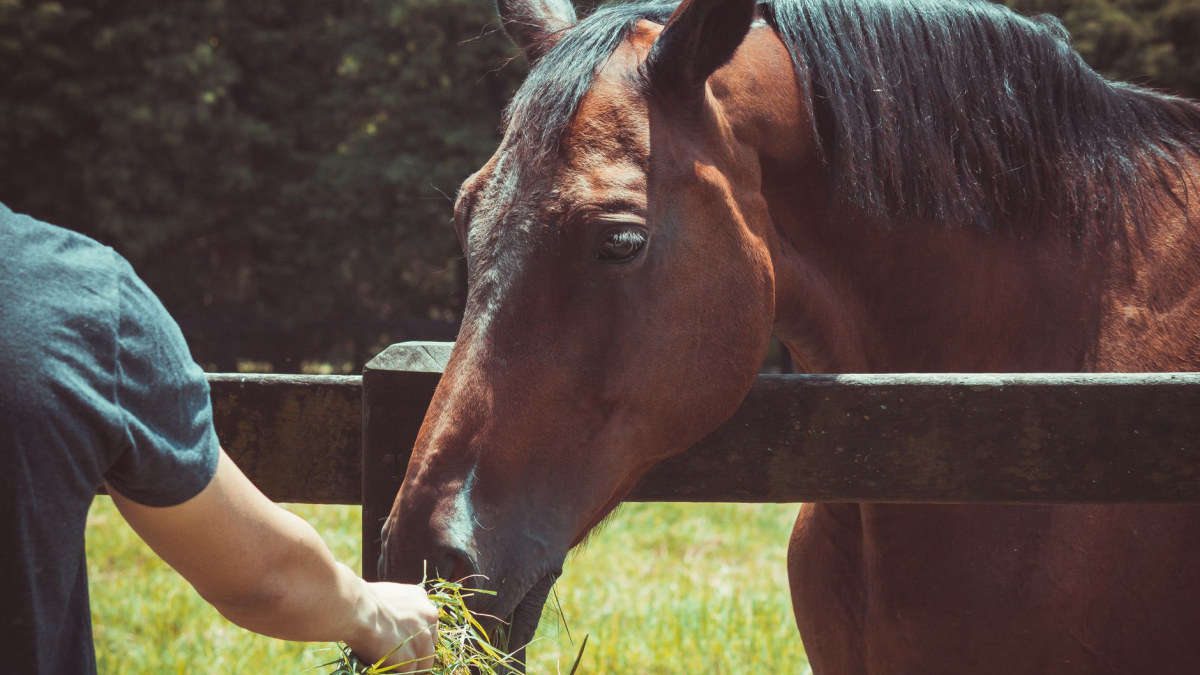
Quick answer: Don’t feed horses you don’t know without asking the owner or handler first. Horses can have invisible medical conditions — such as Cushing’s disease, laminitis, or food allergies — that make even small treats dangerous. What looks like a kind gesture can cause serious harm. If in doubt, ask before offering anything.
We get it. Horses are adorable. They’re also surprisingly expressive. So when one leans over a fence and gives you that “feed me, I’m starving” look, it’s hard to resist.
But before you toss them a carrot, an apple, or a small cake, we’d like you to pause for a moment.
At Heartfelt Support, we run horse-centred wellbeing sessions. Our horses are loved, well-fed, and absolutely do not need a snack from a stranger. Here’s why it matters, not just for us, but for anyone with horses in your community.
Some horses have medical conditions you can’t see
Just like people, horses can have conditions you can’t spot just by looking at them, such as:
- Cushing’s disease
- Laminitis, a serious hoof condition often triggered by sugar
- Allergies or digestive sensitivities
Even a small, well-meant treat could make them very sick, or trigger weeks of expensive veterinary care.
Horses are, to put it kindly, not entirely honest
We say this with love. But if horses could talk, they’d say things like:
“No one ever feeds me.”
“You’re the only person who understands me.”
“That lady over there is mean. She never gives me snacks.”
They’re basically 250kg cats with more innocent-looking eyes.
Just like a cat pretending it hasn’t been fed when your partner just gave it a full bowl, a horse will happily tell every person who walks past that it’s starving. We promise. It’s not.
You might be reinforcing the wrong behaviour
Horses are clever. If they learn that leaning over the fence or nudging someone gets them a treat, they’ll do it more.
That might lead to:
- Pushy behaviour with participants, especially those who are younger or less confident around large animals
- Fence biting, pacing, or food aggression
- Safety risks for people with mobility issues or who are early in building trust with the horse
You don’t know the whole story
That horse might look lonely. But maybe it just had a big session. Or it might be working with someone who is building trust slowly and carefully over several weeks. If a well-meaning visitor offers a treat or unexpected attention, it can unintentionally disrupt progress that took a long time to build.
This matters especially in equine-assisted wellbeing programs, where the horse’s calm, predictable behaviour is part of the therapeutic environment. A horse that learns to seek food from strangers becomes a different kind of animal to work with.
Our horses are on a schedule
At Heartfelt Support, our horses are on carefully managed diets, regular health monitoring, and strict work and rest schedules. We make sure they stay calm, content, and comfortable so they can do what they do best: help people.
Astro in particular, our miniature horse and the face of our equine programs, has a specific diet and a defined work routine. He is not hungry. He is simply very good at looking like he is.
What you can do instead
If you spot one of our horses in the paddock:
- Give them a wave. They might wave back (seriously).
- Enjoy the view. They are beautiful creatures.
- Reach out if you’re interested in meeting them properly through one of our programs.
You can learn more about our horse-centred support programs and how they work.
A final thought
It’s tempting to show kindness with a snack. We understand. But when it comes to other people’s animals, kindness means asking first. A healthy horse is a happy horse, and we’d love to keep it that way.
Ready to find out if we’re the right fit?
A free 15-minute consultation is a good place to start. No pressure, no commitment.
More from Heartfelt Support

Elements Employment Diversity Policy
Workplaces that are genuinely inclusive for people with disability don’t happen by accident. They require deliberate policy, ongoing commitment, and…
Types of Equine Therapy
Equine therapies are a group of support approaches that use horses to build confidence, regulate emotions, and develop skills. At…

The Neurodivergent Workforce Today and Tomorrow
Neurodiversity is a concept that recognises the natural variation in human cognition. Rather than treating differences such as autism, ADHD,…
My Job, by Astro the Disability Support Pony

NDIS Funding Is Now Split into Quarters. What That Means for You