
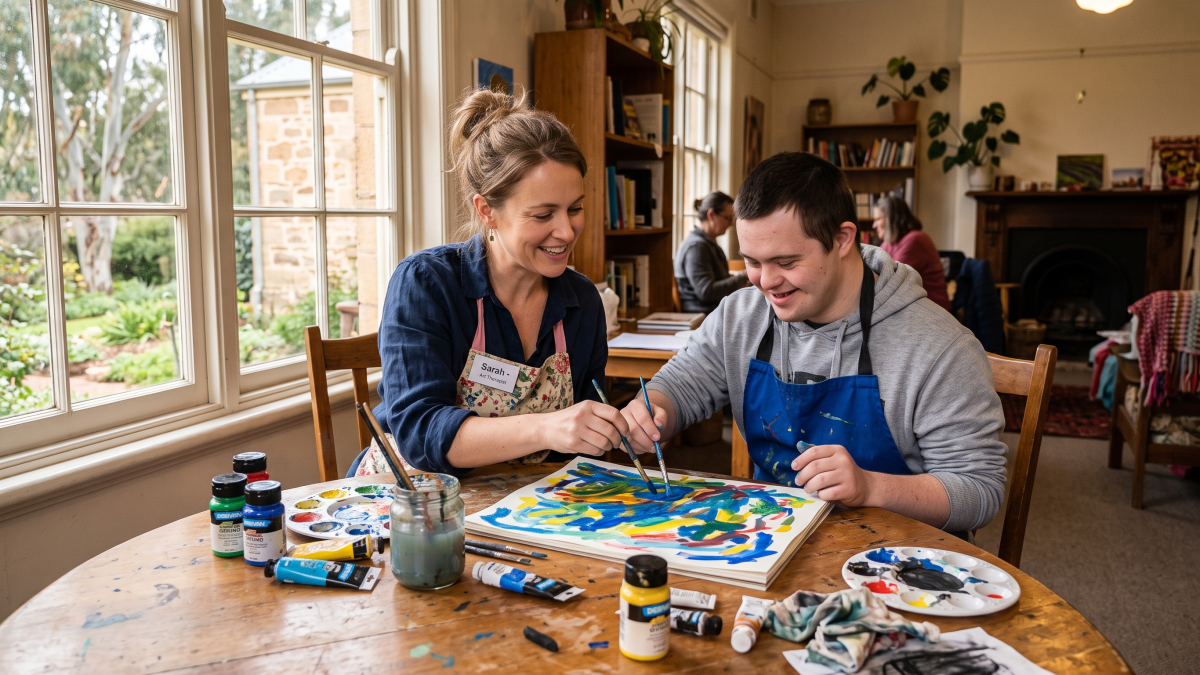
Art therapy has a longer history than most people realise. The idea of using creative expression as a therapeutic tool predates its formal recognition as a clinical discipline by well over a century. Here’s how the field developed from early beginnings to the evidence-based practice it is today.
Late 18th century: early beginnings
The use of art as a means of emotional expression and mental health support can be traced as far back as the late 1700s. In 1764, the artist William Hogarth advocated for drawing as a way to understand and process emotions — an early intuition about the relationship between visual creation and psychological state.
Early 20th century: art as a coping tool
In the early 20th century, the therapeutic potential of art became more deliberate. In 1914, artist Adrian Hill used drawing and painting as a way to cope with his own tuberculosis diagnosis. He later extended this practice to other patients at the same sanatorium, establishing what is considered the first art therapy group. Around the same time, psychoanalysts including Sigmund Freud and Carl Jung began incorporating artistic expression into their clinical work, noting how drawings and imagery could reveal unconscious material that verbal communication couldn’t easily reach.
1940s: formalisation of the profession
The 1940s were a turning point. Psychologist Margaret Naumburg began formally using art as therapy with children experiencing behavioural and emotional difficulties, publishing widely on her approach and helping establish art therapy as a distinct clinical discipline. The first art therapy graduate program was established at the University of Wisconsin in 1945. The same decade saw art therapy used to support World War II veterans returning with PTSD — the same context that saw music therapy formalised as a profession.
1960s and 1970s: expansion
The 1960s and 1970s saw art therapy expand significantly in scope and geography. The American Art Therapy Association was established in 1969, and the profession gained recognition across Europe and Asia. Art therapists began working with a broader range of populations — children, older adults, and people with developmental disability — and the evidence base for clinical outcomes began to develop in earnest.
Art therapy today
Art therapy is now a recognised clinical profession used in hospitals, schools, rehabilitation centres, community organisations, and private practice. It has demonstrated effectiveness for anxiety, depression, trauma, and a range of mental health conditions. Research in the Journal of Autism and Developmental Disorders has highlighted its benefits for emotional expression and cognitive development in children with ASD specifically.
The techniques have expanded well beyond drawing and painting to include sculpture, digital art, collage, and mixed media — and the evidence base continues to grow.
Art therapy at Heartfelt Support
Heartfelt Support has offered art therapy since 2022. Our art therapist works with NDIS participants across a range of goals, including emotional regulation, self-expression, communication, and personal development. If you’d like to learn more or discuss whether art therapy might be a good fit, visit our art and music page or get in touch.
Ready to find out if we’re the right fit?
A free 15-minute consultation is a good place to start. No pressure, no commitment.
More from Heartfelt Support

Elements Employment Diversity Policy
Workplaces that are genuinely inclusive for people with disability don’t happen by accident. They require deliberate policy, ongoing commitment, and…

Types of Equine Therapy
Equine therapies are a group of support approaches that use horses to build confidence, regulate emotions, and develop skills. At…

The Neurodivergent Workforce Today and Tomorrow
Neurodiversity is a concept that recognises the natural variation in human cognition. Rather than treating differences such as autism, ADHD,…

My Job, by Astro the Disability Support Pony

NDIS Funding Is Now Split into Quarters. What That Means for You